

Common Mistakes to Avoid While Following a Karkidaka Diet
Discover five common Karkidaka diet mistakes, from skipping balanced meals to overlooking whole grains, and learn practical ways to build a simple, nourishing monsoon meal routine.
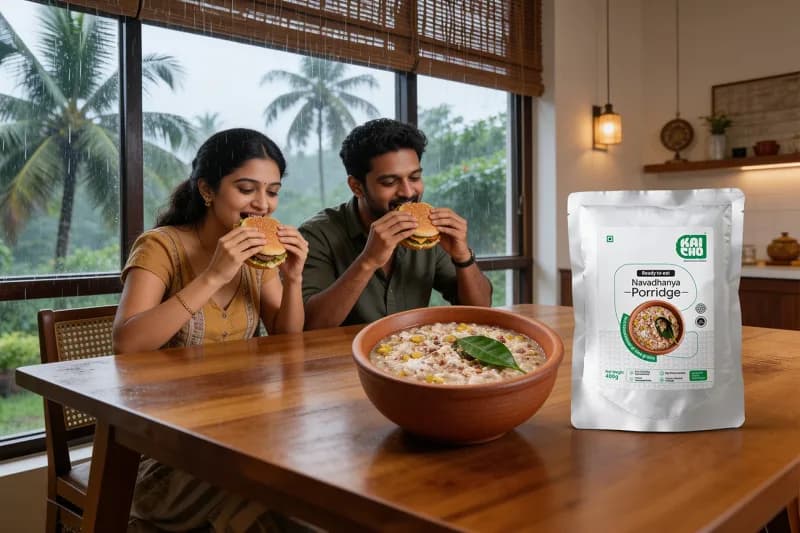
Common Mistakes to Avoid While Following a Karkidaka Diet
Introduction
As discussed in our blog, Navadhanya Porridge: The Superfood of Karkidaka, the wellness season observed across South India in different forms, including Aadi in Tamil Nadu, Ashada in Karnataka, and Karkidaka in Kerala, has begun and will continue over the next four weeks.
The Karkidakam month is deeply rooted in holistic wellness traditions that have been practised for generations. One of the most important aspects of this season is following the right diet. During the monsoon, the body is generally more vulnerable, with immunity tending to be lower than usual. To protect against illness and weakness, many people adopt seasonal diets that are believed to support overall health and well-being.
However, despite the best intentions, certain dietary mistakes can do more harm than good. In this blog, we'll explore the most common Karkidaka diet mistakes and how you can avoid them to make the most of this wellness season.
Mistake #1: Skipping Balanced Meals During Busy Days
Skipping meals has become a common habit, especially among young working professionals. With hectic schedules and endless to-do lists, meals often take the lowest priority. In fact, a study published by the National Institutes of Health found that 24-87% of young adults regularly skip at least one of the three main meals, breakfast, lunch, or dinner.
One of the biggest reasons people skip meals is the lack of time or the effort involved in preparing healthy food. Fortunately, thanks to the age of invention, healthy eating no longer has to mean spending hours in the kitchen. Ready-to-eat, nutritious meals offer a practical alternative for busy lifestyles.
Kaicho's Navadhanya Porridge is one such option. Made with wholesome ingredients and ready in just minutes, it provides a balanced, nourishing meal without the hassle of cooking. So, if time is what's stopping you from eating well, it's time to stop skipping meals and choose healthier, convenient alternatives instead.
Mistake #2: Relying Too Much on Fried or Heavy Foods
The monsoon season generally tends to increase our cravings for fried and heavy foods. More often than not, the serotonin, i.e., the ‘happy hormones’, levels drop because of gloomy weather and reduced exposure to sunlight. This triggers a need for instant mood improvement, hence the chase for junk and carb-heavy foods.
During the monsoon season, the Vata dosha, responsible for movement and circulation, is naturally aggravated. This often leads to sluggishness and lethargy. And, including heavy or oily foods in your diet will worsen this consequence.
So, stick to warm, light, and satisfying meals. Your digestion slows due to the humidity, making it harder to break down oily foods. So, choose foods that are easily digestible and light on your stomach, like healthy porridges and soups. Karkidaka Kanji, one of the best rainy season porridges, is one of the most popularly recommended and prescribed foods during this time by Ayurvedic physicians. It consists of 9-10 powerful grains, the combined power contributing to holistic wellness during this time.
Mistake #3: Ignoring the Benefits of Whole Grains
Whole grains are excellent to include in your diet, not just during the monsoon season, but around the year too. Grains like barley, ragi, and millets are known for a plethora of benefits, including improving gut health and digestion, boosting immunity, and reducing inflammation and cravings.
In a time when your immunity can be compromised, it would be a mistake to ignore the advantages these grains have to offer. Centre your Karkidaka diet around integrating these grains in one or multiple ways. In Kaicho’s Navadhanya Kanji, which translates to 9-Grains Porridge, you can find the benefits of multiple grains like ragi, foxtail, and finer millets, navara rice, and more in one single dish and meal. Not only is it highly nutritious, but it’s also extremely convenient with a 2-step process to have a holistic meal.
Mistake #4: Choosing Convenience Foods with Limited Nutrition
Packaged and ready-to-eat meals are often the first option for a convenient and filling meal. But it’s imperative to ensure these meals are healthy and nutritious, especially if integrating them into your daily diet.
Before purchasing, cross-verify the information provided on the back of the food packets. Check the ingredients list and avoid foods that have maida, added sugar, and artificial flavours. According to your goals, the information you need to check will change, but for the Karkidaka wellness and diets generally avoid foods with any of the above-mentioned ingredients.
If you’re worried that all packaged meals tend to be unhealthy, worry not! Kaicho’s packaged meals are one of the most wholesome and nutritious ready-to-eat products in the market.
Mistake #5: Not Planning a Simple Daily Karkidaka Meal Routine
A simple way to get ahead of the monsoon season consequences for your body is by prioritising the food you’re consuming during this month. And the best way to do this is by planning your meals.
Cooking all three meals can be a Herculean task, but skipping meals or replacing them with unhealthy, convenient meals can be damaging to your short and/or long-term health. So, one of your meals can be a healthy, ready-to-eat meal, and the other two can be one-pot recipes that are nutritious and light on your stomach, like khichdi, rasam rice, soup, etc. Also, include fruits like jamun, lychee, and pear, etc. in your diet as these are rich in vitamins and antioxidants.
So, planning these simple meals will instill a sense of discipline and, as a result, will stop you from substituting these meals with unhealthy ones.
Conclusion
From skipping meals, unhealthy substitutes, to not planning your meals, these are some of the common mistakes to avoid during the Karkidaka season. Keep in mind that these are tips rather than strict rules that you have to follow. Allow room for flexibility, and build your habit of following healthy Karkidaka diets slowly and steadily. So, this wellness season, prioritise your health and well-being and make mindful choices that can easily fit into a daily monsoon routine!
Related reading

Retort Technology Explained: How Kaicho Foods Keeps Healthy Meals Fresh, Safe, and Full of Taste
When you buy packed food, the first questions that come to mind are: Is it safe? Will it taste good? How long will it stay fresh? The answer to all these questions lies in something called retort technology. At Kaicho Foods, we use this modern method to make sure products like Navadhanya

Porridge and Gut Happiness: Why Simple Foods Like Navadhanya Kanji and Mixed Millet Porridge are the Best Food for Gut Health
In a world filled with fast food and complicated diets, sometimes the simplest meals are the most powerful. Porridge, or ‘ganji,’ has been trusted for centuries as a comfort food. It is light, filling, and easy on the stomach.
Do You Really Need Protein Powder? Here's the Truth
Do you need protein powder to stay fit or build strength? Discover when supplements may help, compare protein powder with natural food sources, and learn how to meet your daily protein needs with everyday Indian foods.
Eat well, the ready-to-eat way
Diabetic-friendly, gut-healthy porridges made with Japanese retort technology. Heat and eat in minutes.
Shop the range